Reliance Jio Might Extend Its Offer Till June But Will Charge Rs. 100!
Posted: 20 Jan 2017 05:29 AM PST
 As if it is not enough to run free offers for 6 months, Reliance Jio is considering extending it free offer until 30 June 2016. The current offer from Jio, the ‘Happy New Year Offer’ will expire on 31 March 2017, post which it has planned to charge for its 4G services and had also announced its lucrative 4G tariff plans too. However, it looks like Reliance Jio needs some more time for optimizing its network, sorting out call failures, and improving its coverage and capacity. Mukesh Ambani recently announced another investment of Rs. 30,000 crores into Reliance Jio, which would take the total capital invested in Jio to Rs. 2,01,000 crores. Technically, any telecom operator cannot extend a promotional offer beyond 90 days so Jio would announce a new offer before the expiry of ‘Happy New Year Offer. This new offer would be valid from 1 April to 30 June 2017 and would cost Rs. 100 for data while voice will remain free. This New Offer Would Be Like An Acid Test For JioIt is always easy to attract people to try out your products for free, but the real achievement is when the users would want to pay for your services. So this new offer which would hopefully be announced soon would act as an acid test for Reliance Jio.The test would not only give an indication about the stickiness of Jio customers but would also paint a clear picture as to why 72.4 million subscribers are using its services. Are they only there for enjoying the free services, or do they really like them? In its quarterly results, Reliance Industries had disclosed that Jio’s current debt is Rs. 49,000 crores plus the deferred spectrum payment liability of Rs. 21,000 to the government. Other Telcos Are Putting Up A Stronger Defense Against JioEven though Jio’s tariff plans are the best-in-class offering huge amount of data plus the free voice calls, the incumbents are also launching new tariff plans to stay in the game.Given the fact that Jio’s generous data benefits might poach the subscribers of existing telecom operators, Vodafone India was the first to react by launchings its truly unlimited data pack offering unrestricted 3G/4G internet @ Rs. 16 per hour under the SuperHour pack. Vodafone also announced unlimited voice calls @ Rs. 7/hour to any Vodafone number. Now, following Vodafone’s suit, Idea Cellular has also announced similar unlimited hourly data pack offering 3G/4G internet access at Rs. 22/hour. Airtel is also expected to announce a similar pack soon. When all these competitively priced data/voice plans are available, the mobile subscribers will find few reasons to make the shift to Reliance Jio. This, in turn, would force Jio to revise its plans for retaining its competitive edge, which would lead to very affordable 4G packs, at least in the short-run. If you are an Idea customer, then kindly check the availability of this pack for your number with the customer care before proceeding. Do tell us how much data did you consume using this pack so we can arrive at a very low cost per GB. ;) courtesy of : trak |
Monday, January 23, 2017
Reliance Jio Might Extend Its Offer Till June But Will Charge Rs. 100!

Wednesday, January 18, 2017
How GST Will Impact Startups in India
The long awaited constitutional amendment to Goods and Services Tax (GST) finally sees the light of the day. Given that the businesses in our country face several hurdles in dealing with 29 states, 7 union territories and of course the central government, the uniform tax structure is definitely something to cheer about. GST is deemed to benefit the businesses of all sizes and nature, startups too can expect to look forward to better times ahead.
Currently, India is home to 4200 startups and the third largest startup ecosystem in the world, registering a growth of 40% year-on-year. GST will further boost the positive sentiment around the startup industry in India in many ways. Simpler taxationAdhering to different taxation regulations in different states makes the taxation process more complex and burdensome. GST will simplify it by integrating all indirect taxes, making one single tax to be paid by everyone. The tax calculations will be easier, thereby saving time and energy for the startup entrepreneurs to focus on the core competencies of their business instead of tax paperwork.Simpler registration, easy to scale upVAT registration from the sales tax department is imperative to start a new business. But, a business operating in multiple states has to follow various procedures and pay different types of fees in each state.GST will bring uniformity, simplification and a centralized registration for companies. With GST, entrepreneurs need to get a just single license, and they are all set to do business in multiple states, as long as they pay the taxes. This will pave way for startups to launch, expand or scale their business smoothly. Higher exemption from taxesAs per the current taxation laws in most states, VAT is applied uniformly to businesses with a turnover higher than INR 5 lakh. To lower the tax rates, businesses with a revenue of INR 10 lakh to INR 50 lakh can opt for the VAT Composition Scheme. But this scheme has various terms & conditions attached to it, and is not suitable for every business. However, with the implementation of GST, businesses with revenue less than INR 10 lakh will be exempted from GST; and businesses with turnover INR 10 lakh up to INR 50 lakh will be taxed at lower rates.This will not only reduce the tax burdens for startups, but also help them to invest the money saved on taxes, back in the business. Improvement in logistics efficiencyThe seamless movement of goods and a common market across the nation will result in greater efficiencies in logistics, which is currently a major pain point for startups for two reasons. One, state border checks delay the movement of goods transport vehicles, resulting in delayed deliveries and enhanced product cost to the end-customer.Second, since the large companies have well-defined infrastructure and logistic facilities in place, they tend to stock – transfer their goods to other states and manage to avoid paying taxes on interstate commercial transport. On the contrary, startups neither have logistics nor funds to stock-transfer. So, they procure goods through interstate sales, on which they are liable to pay central sales tax. GST will eliminate such inefficiencies, making interstate movement of goods cheaper and less time consuming. As there will be an uninterrupted movement in supply chain, the costs associated with maintaining high stocks will also be reduced. According to CRISIL analysis, GST can reduce the logistics cost for the companies producing non-bulk goods by as much as 20%. This includes all goods besides the primary bulk commodities transported by railways – iron ore, coal, steel, cement, fertilizers, food grains, etc. BUT….GST is not flawless…..There’s also a piece of bad news for startupsGST can potentially build up an extra burden on startups in the manufacturing sector or with a lesser turnover. According to the existing excise laws, a manufacturing business with a turnover less than INR 1.50 crore is exempted from paying any duty. After GST comes into force, this turnover limit could be reduced to INR 25 lakh, which may kill several startups.The e-commerce startups will bear the brunt as well. The TCS (Tax Collection at Source) guidelines of GST state that e-commerce companies will have to file quarterly as well as monthly returns and collect the taxesfrom sales made on the portal. This will increase documentation and administration cost, the burden of which will eventually pass on to customers in the form of higher prices of the products. Food prices may spike initially after GST implementation, resulting in inflation. There is also a lack of clarity as to whether mandi tax is included or not in GST. Such discrepancies will affect food startups. The GST is also yet to specify what would be the GST rate. The clear picture will emerge only after that. But, in spite of its current drawbacks, GST is the most friendly tax reform ever in the India. It seeks to bring transparency, simplicity and efficiency in the way businesses operate and government levies taxes. Startups should hope for bright, clear skies as far as GST is concerned. courtesy of :Trak |
Tuesday, January 17, 2017
English Should Be Made Compulsory In All Schools From Class 6th Onwards – Govt. Panel On Education
English Should Be Made Compulsory In All Schools From Class 6th Onwards – Govt. Panel On Education
15 Jan 2017 09:23 PM PST
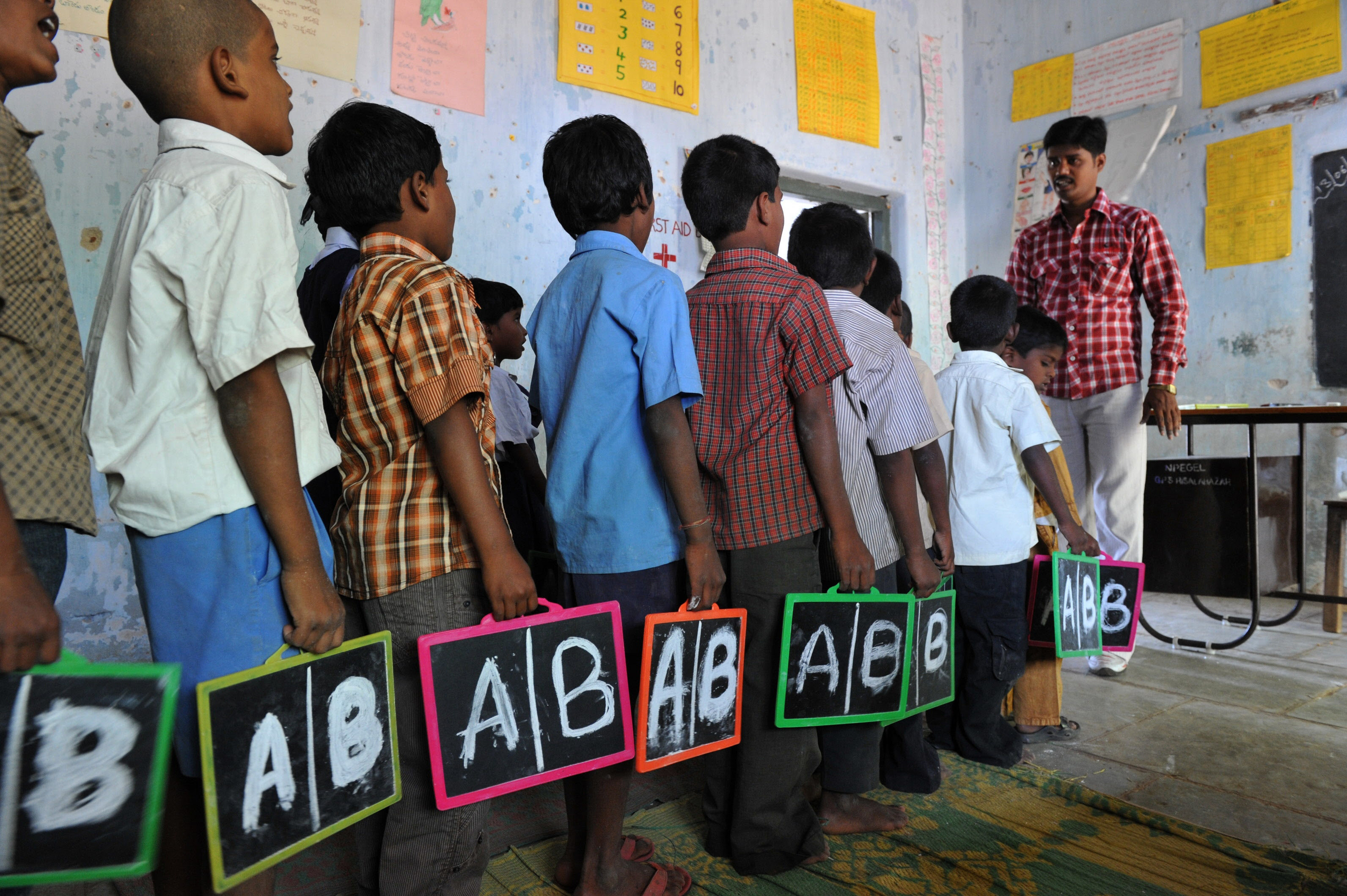
Besides, the panel has recommended that atleast one English language school should exist in every block of the country. There are 6612 blocks in the country, and this single step has the potential to revolutionize education in the country.
The panel which has recommended these suggestions comprised of a group of Secretaries and was named as ‘Group on Education & Social Development’. They put major emphasis on education of English and Science, as they said that English should be made “a compulsory subject in all schools from class 6th onwards” and “at least one English medium school (be set up) in every block along with Science education facility in a radius of 5 kms”.
Can English Improve Lives Of Indians?
In August, 2015, we published a report which stated that 97% of Engineers in India cannot speak English, and as a result, 80% of all Engineers are unemployable as software engineers. This report created massive uproar, as Engineers claimed that English cannot be the sole criteria for judging their capability.
However, the fact of the matter is, English is right now a Universal language, and majority of higher education is in English. Software industry relies on English language, so is Services, ITeS and other computer related industries.
The panel has rightly understood the fact if Indian youth wants to compete against global powers, then they need to study and master over the English language.
The State of English Right Now
As of now, the study of English and other languages is guided by the Three Language Formula as laid down in the National Policy on Education (Parliamentary Resolution) of 1968. As per this ‘formula’, students of Central Board of Secondary Education-affiliated schools need to learn English in their first eight years, meanwhile for students of class 9th to 12th, there is an option to choose between English and Hindi.
Besides, the formula suggests study of English, Hindi and a ‘modern Indian language’ in Hindi speaking states, and study of English, Hindi and a regional language in non-Hindi speaking states.
Way back in 2011, we had reported that proficiency of English speaking among Indians is lower than that of Chinese. However, at the same time, India has one of the largest English speaking population in the World.
English As Compulsory Subject – Political Implications
RSS, which has been the ideological force behind the political decisions of BJP, has been recommending Hindi as the compulsory subject, and had suggested removal of English as a subject from Govt. schools.
RSS-affiliated Shiksha Sanskriti Utthan Nyas (SSUN) had last year sent a proposal to Ministry of Human Resource Development, requesting that Hindi should be made the medium of teaching from elementary to higher levels, and English should be not be compulsory at any level.
Thus, there is a clear political opposition to the study of English, and it would be interesting to observe how Govt. responds to the suggestions of the high level panel, which wants English language to be the compulsory subject.
Do you believe that making English can solve problems for India? Should English be made compulsory for all students? Do let us know by commenting right here.
Image Source: GG2.net
Reliance Jio to Bring 4G VoLTE Phones at Rs. 999
Reliance Jio to Bring 4G VoLTE Phones at Rs. 999
Posted: 12 Jan 2017 03:38 AM PST
 After disrupting the telecom market in India with their incredible offers of free calls, free Internet and free SMS, Reliance Jio has now set their aim to disrupt smartphone market as well. As per unconfirmed reports, Reliance Jio will soon offer 4G VoLTE enabled ‘feature phones’ which will offer free voice calls along with cheap 4G data as they are VoLTE based. However, it is not clear whether these cheap feature phones will be enabled to browse the Internet like other smartphones or not. Reliance Jio’s Hardware Disruption This TimeAs per available reports, there would be two models of low-cost 4G phones by Jio: Rs 999 and Rs 1500.Currently, Reliance Lyf Flame 3 is the cheapest 4G smartphone offered by Jio, which is priced at Rs 2,999. Hence, in a way, Jio will break their own price barrier when it comes to selling 4G phones. Some of the features which this low-cost 4G VoLTE feature phone by Jio shall have:
Which Segment Will It Target?Jio’s low-cost 4G feature phones will most probably target those users who are still buying feature phones, and are wary of buying high price smartphones, forget 4G VoLTE based phones.As per some market analysts, the branding and advertisement campaign would be delicately targeted only towards feature phone users. Hence, there would be no impact on the smartphone market per se. And based on the current trends, it seems a logical and valid business proposition. Because in 2016, feature phones’ market share were projected to be more than 50% of the overall phones sold in India. Thus, there are more feature phones sold than smartphones, and precisely this is the reason that Jio wants to target this segment. Do you think that Jio’s low-cost 4G VolTE smartphones can make a dent in the phone market in India? Do let us know by commenting right here. courtesy of : Trak |
Wednesday, November 23, 2016
Paytm Has Just Created Millions Of PoS Across India With A Single Move; Every Paytm User Can Now Accept Card Based Payments
Paytm Has Just Created Millions Of PoS Across India With A Single Move; Every Paytm User Can Now Accept Card Based Payments
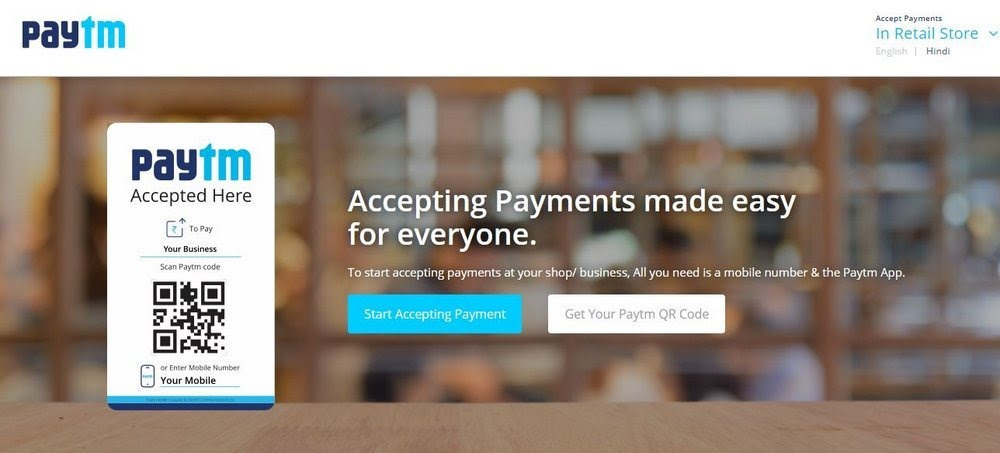
Paytm has just created millions of Point of Sales (PoS) across the nation, with one strategic move. Now, anyone with a merchant account with Paytm can receive payments via debit card/ credit card, which means that digital payments have been super-simplified and scaled beyond imagination.
This is certainly one of the masterstrokes by Paytm for encouraging even more digital transactions and a good move towards an absolute cashless economy. Paytm founder Vijay Shekhar Sharma said, “India needs a very innovating mobile pos machine and Paytm has already been accepted by many merchants. By extending our merchant network to all other payment networks, we are enabling digital payments to a very large number of Indians.” How Will It Work?Suppose you visit a local grocery shop to purchase few items and the shop-keeper has a Paytm account. Now, there can be two scenarios: Either you also have a Paytm account, which means that you can simply transfer the amount. Or, you don’t have a Paytm account, but have debit/credit card to make the payment.In this case, the merchant can accept your debit/credit card via his Paytm app, and complete the payment. This is how it will work: Step 1: The merchant raises the bill, and gives you his phone wherein you enter your debit/credit card number Step 2: The customer receives an OTP on his mobile number Step 3: Enter the OTP inside merchant’s Paytm app Step 4: Payment complete Till December 31, there would be no fees for such card based transactions on merchant’s Paytm app. The new version of the app has been updated, and under ‘Accept Payment’ tab, merchants can receive payments from cards issued by Rupay, Visa, MasterCard and Maestro. Big Boost For Cashless EconomyThere are around 150 million users of Paytm, and almost 1.5 million merchants registered with the. With one single step, these 1.5 million merchants can now accept debit and credit based payments, thereby transforming into a live PoS, instantly.Besides, RBI has recently increased the limit for merchants to Rs 50,000 per month, which means that they can send upto Rs 50,000 from Paytm app to the bank, without KYC. This, along with PoS transformation means that merchants would now prefer Paytm mode of accepting payments (both from credit/debit card or peer-to-peer money transfer). Merchants can register with Paytm by visiting here. Paytm is expecting atleast 10-15 million more merchant accounts after this decision to convert apps into PoS. We will keep you updated as more details come in. courtesy of ; TRAK |
Sunday, November 6, 2016
LinkedIn Signs MoU with HRD ministry, Makes it Easier for Students to Find Jobs
LinkedIn Signs MoU with HRD ministry, Makes it Easier for Students to Find Jobs

LinkedIn has been trying to make an impression in the Indian job industry with a slew of services like the Placements and Starter Pack. The Indian job market is not very straight forward, and competing companies like Naukri.com and Timesjobs already have a strong user base.
To take on such services, LinkedIn has signed a Memorandum of Understanding(MoU) with the Human Resource Development Ministry to create and market more job opportunities for students across India.
LinkedIn has its own Jobs portal where companies and recruiters can post their company openings. Job seekers can also directly apply through their LinkedIn profiles, making it easier for the seekers and cutting down time on creating CVs.
Millions of students graduate every year, and number of jobs available in the market are relatively low. Also, a lot of students get misguided after graduation and pursue something they are not fit for, due to shortage of opportunities. Through this MoU, the Placements product will be adopted by all Indian colleges affiliated with All India Council for Technical Education (AICTE).
Akshay Kothari, Head of Product – LinkedIn India, said “Our objective with Placements is to help India’s best talent get access to job opportunities, regardless of their location. With this partnership, we are excited to see our vision quickly become a reality.”
LinkedIn Placements provides an equal opportunity to all students, regardless of their location or college, through an online assessment test, which gives them access to thousands of openings in 35 top corporates in the country. This test is standardized across campuses and does not have any conditions and filters.
The service has already received a lot of interest from students and job seekers, with 1.2 million job applications in less than 2 months. Placements also makes it a tad easier for fresh graduates to apply to dream companies, that were out of reach earlier.
Will AICTE be able to help students?
The main issue with colleges in India is infrastructure and adherence to guidelines. AICTE might direct all the affiliated colleges to start this Placements service immediately, but the infrastructure and the processes will make it painfully long for students.
Especially right now, when the market is at its high, providing this opportunity to students will make it extremely competitive and beneficial for the companies. However, a lot of colleges lack proper conditions to allow their students to even take the test.
Another issue is the quality of education. The top colleges in India have better quality of education, giving them an advantage over the lesser known colleges. In the end, the more educated the student, the easier it is to get placed in these top companies.
The best solution would be to combine Placements with Khan Academy or Coursera to allow students to prepare and compete with everyone around India. This will ensure everyone is at par for an exam that is the same across different colleges.
courtesy of: trak
Thursday, November 3, 2016
Airtel Might Offer Cheaper Voice Calls In Future, But Not Free
Airtel Might Offer Cheaper Voice Calls In Future, But Not Free
Posted: 03 Nov 2016 07:57 AM PDT
India’s leading telecom operator- Airtel has rubbished the possibilities of offering free voice calls for lifetime even though the new entrant, Reliance Jio is aiming to capture market share with its free voice offering.
 Gopal Vittal, MD & CEO, India and South Asia, Bharti Airtel, mentioned the telecom sector as “brutally competitive market” and said that the competitors kept Airtel at it toes, but it never got “obsessed” with them. Since Jio is a new entrant into the immensely competitive telecom market, it is bound to have ‘market penetration’ as its pricing strategy which will erode the margin of the incumbents. “If the question is are you going to see price erosion…I think given that you have a new entrant on the horizon, yes, you will see some price erosion. Because that is the game new entrant will play,” said Vittal. Jio is offering free voice and data to its subscribers under its ‘Welcome Offer’, valid till 31 December 2016, for those who get a Jio SIM before 3 December. Post that, the users would still be able to make free voice calls for life as long as they are subscribed to any of the Jio’s tariff plans. It is worth noting that as a result of this free data offering, Jio’s average data speed has dropped considerably. Airtel is also offering unlimited voice calls on its Infinity pack priced at Rs. 999 but it is not offering it for free. A telecom operator needs to make money from one way or the other. If it is making good amount of money from one offering then it can offer the other at a reduced rate or may be for free. “There will be a large number of customers who are on basic feature phones and low end smartphones who will want to buy services differently. They will want to de-couple voice and data. Equally, there will be a set of market where they will want (it) bundled…If a guy is not paying for data at all, he will pay for something,” Vittal added. Airtel also made it clear that it will not be offering standalone free voice plans. “If you are only buying voice, how will one do that?” Vittal explained. It doesn’t come as a surprise to us as offering very affordable free voice plans won’t make sense for any telecom operator. Jio might be able to pull it off, by the economies of scale and with a huge base of loyal customers subscribed to monthly packs starting from Rs. 149 and above. As we earlier reported, Airtel is also upgrading its LTE network to VoLTE, so we can expect to see VoLTE voice packs priced very competitively, but certainly not for free. |
Thursday, November 26, 2015
Indian Parliament to go Completely Paperless Starting Today #DigitalIndia
Indian Parliament to go Completely Paperless Starting Today #DigitalIndia

Today, winter session started in the Indian Parliament and for the first time, the corridors of the institution will not be filled with bundles of papers as the it is going completely paperless. From this session onwards, all annual reports from various ministries, committee and panel reports, private member’s bills, unstarred questions and bulleting –1 will be uploaded on the Parliament website.
The Government is also carrying out a comprehensive training program for all the MPs on how to use Digital documents going forward. Once the training is over, all the ministers and MPs and expected to use the digital version.
The new move will not only cut down on the usage of paper significantly but also will usher a new age into the parliament, where all MPs will able to access any and every document at a touch or a click of a button making Parliament sessions more productive.
While initially, those MPs without much tech know-how may face some teething problems, proper training should help them get upto speed within no time.
In February of this month, it was also announced that Union Cabinet meetings will use Kindle and will go completely paperless. All notes of the meeting will be put up on Kindle devices for ministers reference. The ministers will be able to access those notes from their eBook readers at meetings and then return these devices to the Cabinet Secretariat immediately after.
While such plans and proposals have been around for quite a few years, it is heartening to see Modi led government’s intent in bringing about these changes. Sources have mentioned that personnel from National Informatics Centre (NIC) have been working overtime to make this digitization possible.
What is also good to see is that Government’s Digital India initiative has an holistic approach, where every Government function and activity is being digitized rather than being done in bits and pieces manner.
We are sure that this initiative may have met with a lot of opposition as most of our ministers (who are on the wrong side of seventies) are zero tech-savvy and they resist change. Even after all this, the Parliament has boldly gone paperless!
Cortesy of : trak.in
Sunday, November 15, 2015
Indian Postal Department Will Now Convert Your Selfies Into Postage Stamp!
|
Posted: 12 Nov 2015 09:51 PM PST
 Stamp department of India Post have introduced a unique program, wherein anyone can convert their selfies into a valid postage stamp. Christened as ‘My Stamp’, this innovative program can be seen as an interesting plot to revive the old tradition of hand written letters and snail mails. As per reports, India Post is already in the process to acquire high end printing devices, which can efficiently convert selfies into postage stamp. Prasar Bharti informed this via Tweet yesterday:
After some time, All India Radio also confirmed this development, by tweeting: “#Indian Postal department would soon launch a scheme ‘#MyStamp’ in which people can convert their “Selfies” into a postage stamp.” Charges for Selfie-Postage StampDNA India reported that India Post will charge a fee of Rs 300 to create a dozen worth of postage stamp from your selfie. As per the reports, one needs to visit the Head Post Office with a selfie and fill out a form detailing your identity. Soon, the selfie would be scanned, and converted into a legal postage stamp and provided to you instantly.In case you don’t have any camera to click to selfie, India Post will provide you one on the spot, and help you to click a selfie! The ‘My Stamp’ sheet will have 12 customized postage stamps, printed with the selfies of the person who is willing to shell out Rs 300. In Bhutan, this special program has been running for quite some time now; wherein tourists can convert any picture (or selfie) into a legal postage stamp. Introduction of this innovative program in India can certainly help India Post to generate a new level of interest among net-savvy generation. Meanwhile, India Post has launched a stamp design competition for Republic Day – 2016 celebrations. This competition will give a prizes of Rs 20,000. Details can be found here. Selfies: Driving InnovationThe immense popularity of selfies is now driving innovation across various industries.For instance, Federal Bank is inviting new customers to open a new bank account using just a selfie and Aadhaar Card/Pan Card. Very soon, Master Card will allow payment authentication using selfies as your security credentials can now be verified from your images. Soon, selfies would hold the same importance as fingerprints. Selfie, along with Hashtag and Tweep have already found mention in the 2014 Merriam-Webster Dictionary. However, selfie clicked inside a polling booth during an election can also land you in jail. Will you convert your selfies into postage stamps? Do let us know by commenting right here! courtesy of : trak |
Thursday, November 12, 2015
Zomato Blacklisted By 6 IITs for Campus Placements; Students Warned Against Contacting Them
7 year old Zomato, which is the poster-child of food tech based startups in India, having expanded to 22 countries and generating 1.9 million views page traffic in a month; having a valuation of more than $1 billion have been blacklisted by IITs from campus placements.
Atleast 6 IITs – Delhi, Bombay, Kharagpur, Madras, Guwahati and Kanpur have confirmed this development.
Atal Ashutosh Agarwal, Vice-President, Technology Students’ Gymkhana at IIT-Kharagpur, said, “Any company which violates the procedural guidelines laid down by the AIPC may be blacklisted,”
Meanwhile, another placement official at one of the IITs have said, “No company should take the IIT system for granted,”
Back in July, Deepinder Goyal, founder of Zomato had lashed out against IIT Delhi, the place from where he had graduated. The issue was that Zomato was not provided day 1 slot for campus interviews, as the salary + ESOPs offered by them amounted to just Rs 26 lakh, a figure way too less for IIT Delhi’s standards.
He had said, “Campus placements in India are broken. Placement cells optimize only for money. Growth, esops, quality of work is secondary.”
Mohak Mehta, former placement manager at IIT Bombay says, “There are startups which get very egoistical about getting an early slot.”
At that time, IIT Delhi had responded by saying, “Any company which has to compete for a slot has to match the cash salary offer. Zomato did not match the salary offer,”
The issue didn’t end, it seems. Placement heads from 6 different IITs have now ganged up, and entirely stopped Zomato from entering their premises for any placement related activity.
As per Times of India, the main reason for Zomato’s blacklisting may be the recent layoffs, wherein their management had fired 10% of their employees in one single go. IITs do tend to give a warning in case of such unprecedented actions by recruiting companies; and blacklisted in case of severe actions.
Students Warned Against Contacting Them
An unverified circular from IIT Delhi is making rounds in the social media, which explicitly warns students from contacting Zomato in any form. As per the circular, Directi, a domain and web hosting company along with Zomato are blacklisted from campus placements, and if any student is found aiding them or contacting them, on or off campus, then strict disciplinary action would initiated against them.
This is most probably for the first time in history that IIT students are being warned from contacting a billion dollar startup!

We are still trying to verify the authenticity of this circular.
Meanwhile, blacklisting of Directi, which was implemented last year, may be revoked for 2015-16 placement season. They were blacklisted over placement interviews at IIT Kanpur last year. Placement heads at one of the IITs said, “Since IIT-Kanpur was the most aggrieved party, the decision to revoke the ban has now been left to them,”
Recently Deepinder Goyal came into news for sending out a hard hitting email to their sales team, detailing how they are missing the targets and more firing may become a necessity. The stern tone of this email surprised one and all.
We had earlier covered how Deepinder Goyal performed poorly at Reddit India AMA; and we had shared his 16 weird answers.
Is this recent blacklisting an issue of ego clash or a personal vendetta against Zomato? We will keep you updated as more details come in.
Courtesy of : TrakTuesday, September 29, 2015
Google With Digital India: Android Will Have 11 Regional Languages; WiFi Plan Across 400 Railway Stations Confirmed

During PM Modi’s recent visit to US where he met top notch CEOs and founders of technological companies, several new and exciting updates were announced, which were in sync with Digital India vision.
Here are two major updates from Google, which were shared by their CEO Sundar Pichai during his meeting with PM Modi:
Android Will Have 11 Regional Languages
In order to spread the usage of smartphone among non-English speaking population, it is very important to deliver them content and functionalities in their regional language.
Sensing this need, Google will now provide Android OS in 11 regional languages of India. Although details were not shared regarding which languages are included, but Sundar made sure to make PM Modi happy as Gujarati is included in this list.
This is certainly one of the biggest decisions from Google, to help the spread of Digital India vision. We had earlier shared that Hindi content consumption is growing at a rate of 94%; while 37% of Internet users want content in their regional language.
Internet Across 400 Railway Stations: Biggest Public WiFi Project In India
Sundar Pichai confirmed their promise of providing high speed WiFi across 400+ railway stations across India. We had already shared this news earlier in September, when we had published some exclusive images of this project.
Sundar Pichai, officially announced the WiFi project via blog, where he said that Google, along with RailTel will provide Internet access to 10 million passengers a day.
To start with, they will roll out high speed Internet via WiFi across 100 stations by the end of 2015; which would be later expanded to 400 railway station.
Interesting part is that, this WiFi won’t be free after first 30 minutes. However, by paying for a service, rail passengers would be able to access unrestricted Internet in train, and the speed would be fast enough to download a movie in 5 minutes!
Once executed, it would be the largest public WiFi project in India.
As we had shared earlier, collaboration with RailTel is the master stroke which Google has played, as they are now not dependent on traditional ISPs such as Reliance and Airtel to provide WiFi. Due to this restriction, their earlier project of Google Fiber was not executed in India.
RailTel already has coverage of 63,500 kms of rail track, across 5000 railway stations; They have already laid fiber network across 32,500 kms, and work is in progress for 29,500 kms now.
After disappointments from Facebook, these new updates from Google are whole-heartedly welcomed because this is the true Digital India expansion: Fair and Quality Internet for all.
Courtesy of : Trak
Tuesday, September 22, 2015
Google Launches Online Courses and Scholarships in India with Udacity & Tata Trusts
Google Launches Online Courses and Scholarships in India with Udacity & Tata Trusts

Outside the US, India has the largest number of app developers. The community in India is growing widely, and taking a note of that, to empower these by giving quality education, Google is taking a leap to help these by training them massively.
The Internet giant along with Tata Trust have tied up with US based renowned online education platform Udacity to provide certification for the online courses.
Its an interesting course module, not like the existing ones we have lying all over the Internet. It is called Android Nanodegree. It will be of great help to developers who want to learn new skills but are out of resources. It is going to be of help to those who are working professionals as we have seen that it gets difficult to get out of your zone and take up a course when you need to ear for a living.
Another interesting facet to this story is that Google and Tata Trust will offer 500 scholarships each to candidates through the programme. This will again ease the burden of those who are not financially sound.
Here is an introductory video on Android Nanodegree
There has been a huge rise in number of smartphone users in the country since 2011, there are hence growing number of app developers coming up to cater to the growing needs of smartphone users, however, they haven’t reached the much needed mark of efficiency yet.
The course offered by Google will take about six to nine months and costs Rs 9,800 per month with Udacity refunding 50 per cent of the tuition fees upon completion. That’s a quite good deal.
Udacity is also trying its best to overcome the language barrier. “We are working on translations and captions for videos on YouTube. We have been already providing it in 12 languages across the world, but are yet to start working on Indian languages,” said Peter Lubbers, senior programme manager, developer relations at Google.
There couldn’t be a better online trainee for a country like ours which has a base of over 3 million software developers. At this pace, we are likely to overtake the US till 2018. However, these developers lack quality. Though they are plenty in numbers, not a single app from this Indian community is on the list of top 100 at the Google Playstore.
Google, hence wants to become the backbone of this workforce, strengthening them with pivotal knowledge, easily obtainable online, so that they are not just large in numbers but also good in quality of apps they create.
“With the launch of this programme, we want to bridge the gap by providing India’s developer community an easy access to learn and build high quality apps for the world. Today, only two per cent of apps built in India feature in the top 1,000 apps globally and our goal is to raise this to 10 per cent in the next three years,” said Rajan Anandan, vice-president and managing director, Google South East Asia and India.
Over a million of engineers graduate from India every year. Five percent of these train to become developers, and just one fourth of them become app developers. These figures clearly state how bad India needed this. Some rigorous training of international standards, and our developers would be well developed to aim at the stars!
courtesy of : Trak
Sunday, September 20, 2015
BSNL Will Start Offering Competitively Priced 4G Services By March 2016
BSNL Will Start Offering Competitively Priced 4G Services By March 2016
|

The 4G mobile internet wars are heating up – while Bharti Airtel has taken a lead by launching their 4G services across 296 towns and cities in India, other telecom operators like Vodafone have announced that they will start offering 4G connectivity by end of the year. Reliance Jio Infocomm have also reiterated that their 4G services will be available by December of this year.
Now, state run telecom operator BSNL too plans to launch their services by March 2016 at competitive rates. BSNL Chairman and MD Anupam Shrivastava told ET, “We will launch competitive tariff plans to match Reliance Jio and other private telecom service providers’ pricing, be it 4G or 3G, by the end of this year”
BSNL has 20MHz spectrum in 2500 MHz band in 15 Licensed Service Areas (LSAs) where the 4G connectivity is expected to come up first. BSNL is also currently in talks with MTS to launch 4G services in 800 MHz, but no official announcement has been made as yet.
Most existing Indian telecom operators including BSNL are quite wary of Jio Infocomm’s aggressively priced 4G services. Jio’s 4G tariff are expected to be extremely cheap compared to other providers.
Shrivastava added, “We compete with each other and share infrastructure with Reliance Jio as well. In today’s scenario, it should not be seen as a competition as the objective is to serve consumers”. He also said that BSNL might take the Wi-Fi route to offer 4G services an are currently in talks with other telecom operators for Sharing of their spectrum.
Jio Infocomm has pan-India BWA spectrum in 2300 MHz band, and has also acquired airwaves in 800MHz and 1800MHz in the recently-concluded auctions.
It seems that BSNL also wants to play the price card, and may even launch 4G at rates below Jio Infocomm. According to BSNL sources, the rates for 4G connectivity will announced later in December this year.
courtesy of : Trak.inThursday, September 10, 2015
Google Docs Adds Hindi Voice Dictation, Research Tool and More
Google Docs Adds Hindi Voice Dictation, Research Tool and More


This week has indeed been a busy one for those at Google. After having unveiled the new logo, Google has now introduced many new features, at the very right time when a new academic year for the Americans begins. The feature will now let users type an essay or assignment just by dictating.
The new feature is called “voice typing” and has been added to Google Docs. All you have to do to check it out is, just open a new document, click on the Tools menu and select “Voice typing.” Once done, you need to click on the microphone tab and get started. As per Google, this function will support 40 different languages. For the love of Indian users, it will even support Hindi.
To all up to all this, Google has even added some powerful new features to its cloud-based office suite. This step is certainly going to make some applications more appealing to those in the classroom. However, what we see as a negative here is that Google Docs word processor is not yet set in place for Android. The only way to access it is by desktop users who use Google Chrome’s browser.
Going ahead with the voice-typing feature, it will only type what you say. The drawback here is that it cannot tell you what punctuation marks are needed or where they are to be placed. As the user dictates the text in the content, he will even have to dictate where commas, periods and other punctuation marks are to be placed. This would probably be the ideal format for people who just take down running notes.
Google has also added some interesting updates to slides and sheets. The Android App of Google Docs will now allow you to pull in facts, quotes, images and more from Google search. Google Sheets also features innovative visualization tools for all of data display and the company has added pre-designed templates for Google Sheets, Docs and Slides.
The company states that the new feature is targeted towards classrooms. The ‘research’ feature will allow the user to surf the web, and while doing this, the user wouldn’t have to minimize the word processor application and switch to the browser.
This will indeed be a good add on to those students who do not use desktops or laptops, but tablets in classrooms. The population of such users is on a high currently because of the low budget tablets being widely available in markets. The SafeSearch would be on by default and only the images that are tagged as “licensed for reuse” will show up in search results. Now this one looks similar to the one that Microsoft employed for Bing search images from office suite.
“Google’s mission is to organize the world’s information,” said Google Apps for Education product management director Jonathan Rochelle. “That is especially true for students and teachers.” The new benefits we believe will not only be of benefit to students, but a large audience who uses Google Docs as they can now give fingers a break!
courtesy; trakAmazon Adds 7 New Fulfillment Centres Across India Taking Total Tally To 20
Amazon Adds 7 New Fulfillment Centres Across India Taking Total Tally To 20

Amazon India today announced that it has added seven new Fulfillment Centres (FCs) across India to meet the growing needs of its fast-growing seller base. The new New Fulfillment Centres have been opened in Ahmedabad, Delhi, Kolkata, Nagpur, Gurgaon, Pune and Mumbai.
With the launch of these new FCs, Amazon now has a total of 20 FCs operational across 10 states in India covering a total area of over 1.6 mln sq ft with a storage capacity of nearly four million cubic feet.
More number of fulfillment centers means better and faster service for Amazon India customers. The new FCs will also enable thousands of small and medium businesses in these cities to gain access to and service customers across the country at significantly low operating costs.
If you are not aware, a Fulfillment Centre is a warehouse, where online retailers who use ‘Fulfillment by Amazon (FBA)’ services, stock their inventory. When using FBA, sellers across India send their products to Amazon’s fulfilment centres and once an order is placed, Amazon picks, packs and ships the order to the customer, provides customer service and manages returns on behalf of the sellers. Orders fulfilled by Amazon are eligible for Cash on Delivery, Guaranteed Next-Day, Same Day, Release Day and Sunday delivery.
Customers will now see far more products that will have “Amazon FulFilled” batch while shopping on Amazon site!.
Amit Agarwal, Vice President and Country Manager, Amazon India said, Sellers on our marketplace have been witnessing exponential growth with overall volume growth exceeding 500% in the latest quarter and largely powered by our Fulfilled by Amazon service contributing more than 75% of total units. We remain committed to investing in our fulfillment and logistics capability to enable and empower sellers to serve customers nationally at lower costs and increase sales”
With launch of 7 new fulfillment centers, Amazon India now has FCs in states of Gujarat, Haryana, Karnataka, Maharashtra, Delhi, Punjab, Rajasthan, Tamil Nadu, Telangana and West Bengal. Amazon claims that they now have over one million products for immediate shipping through the network of Amazon’s FCs in India.
courtesy of :trak
Tuesday, September 1, 2015
Now Book New LPG Connection Online; or Simply Pick a 2kg One From The Local Kirana Store
Now Book New LPG Connection Online; or Simply Pick a 2kg One From The Local Kirana Store
Government’s Digital India initiative is flourishing more than we thought it would. It is leaving its prints in every sector of the society, not just sticking to e-governance and transparency, for what it was initially introduced. It has now introduced online bookings for new connections for subsidized cooking fuel. After having introduced a 5-kg cylinder back in 2013, it is now planning to launch 2-kg bottles at local kirana stores, for making things just more convenient.
“We are now planning to introduce a 2-kg cylinder that can be easily carried… this will be particularly beneficial for the rural people and poor who cannot afford to pay the price of a 14.2-kg or even 5-kg cylinder,” said Oil Minister Dharmendra Pradhan.
While speaking at the launch of online booking of LPG connections, Pradhan said, “Consumers can now book a new connection online. It will be verified within 48 hours and a person from the nearest LPG agency will deliver a new connection at the door-step in next 3-4 days,” he said.
The portal called Sahaj has been launched on MyLPG.in where citizens book an LPG connection and make payments for the connection online. This service will be available for citizens in Delhi, Ahmedabad, Bengaluru, Bhopal, Bhubaneshwar, Chandigarh, Chennai, Hyderabad, Kolkata, Lucknow, Mumbai, Patna and Pune for now, and will be launched across the country in the next few days.
The procedure of physical booking being taken online will make booking new connections a hassle free process now. Also, this will also help in better governance, as in physical bookings too, one has to fill pockets of officials to get their connections soon. Also, time-saving is a major plus point of this initiative.
In July, many initiatives were launched under the Digital India week, such as Digital Locker, Bharatnet, e-Sign and others. As fascinating as it may sound, over 20k villages are now connected by broadband. The government also has reached out to the education sector by launching eBasta. Launch of online LPG bookings has just added up to its growing umbrella.
The portal interestingly states that it is maintained by the ‘respective oil marketing companies’. It also has a link to the government’s Give it Up initiative where PM Modi had requested the well-off people who can afford to pay market price, to voluntarily give up their subsidy to help extend its reach to the most needy.
There is also a ticker stating that the scheme PAHAL has made it to the Guinness World Record. As we dig in for more, we see that the scheme to pay subsidy directly in bank accounts of customers, called the Direct Benefit Transfer on LPG, has been recognised by the Guinness Book of World Records as the largest cash transfer programme in the world. It has also eliminated middle-men and black marketers and ensured the fuel is delivered to right people.
The MyLPG portal is available on phones, tablets and computers. Users can book their cylinders, register for a new connection, track cylinder booking and delivery dates, choose the distributor, Aadhaar linking status, monitor LPG subsidy transferred to bank and surrender their connection online. It has been created by the Ministry of Petroleum and Natural Gas along with oil marketing companies like Indane, Bharat Gas and HP Gas.
A TOI report also states that after a new application for an LPG connection is received, the system will automatically detect a dealer best suited for the user and email or message them the customer ID number, within 48 hours of application. Once this number is received, the user can pay online, after which the system makes a duplication check. Post that, the dealer will deliver the regulator, cylinder and rubber pipe to a new user. Apparently, the whole process will take 6-7 days.
Monday, August 31, 2015
Airtel and Idea Increase 3G Data Charges For Post Paid Customers: 2 Possible Explanations
Airtel and Idea Increase 3G Data Charges For Post Paid Customers: 2 Possible Explanations

As per new updates, both Idea and Airtel has increased 3G data charges for their post-paid customers by 20%.
The new increased tariffs have been rolled out selected circles across India.
Airtel has implemented these increased charges in Delhi, Haryana, Himachal Pradesh, Maharashtra, Punjab, Rajasthan, UP East and UP West circles; while Idea’s new rates would be applicable in Delhi, Punjab and UP West.
In these circles, both Airtel and Idea post paid customers would now pay Rs 300 for 1 GB of 3G data, which was Rs 250 earlier.
As per Airtel, this new tariff would be only applicable for new customers; Idea refused to share more details.
Within 2 months, this is the second time telecom operators have increased data charges. In the month of June, Airtel, Idea and Vodafone had increased 3G and 2G data charges for their pre-paid customers by 11 to 47%.
However, Vodafone hasn’t issued any update for post-paid customers yet as they are still offering 3G data for post paid account at Rs 250 per 1 GB.
However, the question arises, why this sudden increase in rates, especially when 4G is about to be rolled out by Reliance Jio and Airtel?
2 Possible Reasons for Increased Data Rates
We are amidst a very intense battle for 4G roll-out across India, as Reliance Jio wants to acquire 50 lakh customers in the first 50 hours of it’s launch, whereas Airtel wants to capture 44 cities before Reliance Jio enters the arena.
We have heard rumors that Reliance Jio may offer 4G at lowest ever rates; as per some insider sources, it can touch Rs 60 per 1GB, which is 60-75% less than what telecom operators are currently offering.
Hence, there arise two possibilities which can be the reason why Idea, Airtel and Vodafone decided to hike their 3G charges:
a) Bait and Watch:
Old psychological theories in marketing says that if you increase the price of a product, and then offer discount and sales, then it clicks with the end user; and his mind is tricked into believing that the bargain is good.
Idea, Vodafone and Airtel must be aware of the cut throat prices which Reliance Jio can offer for 4G services, and to counter that, they may be increasing the price of 3G data right now, only to decrease it once Reliance Jio jumps into the market. Hence, it can be a perfect ‘bait and watch’ technique to get more customers.
b) Book Profits Before Its Too Late:
The other possibility, which is both short sighted and evil, is that Idea, Vodafone and Airtel are aware that they can’t compete against Reliance Jio when it comes pricing; hence book as much profits as it’s possible before the bigger fish enters the arena.
courtesy: trak.in
Wednesday, August 26, 2015
Now, Vodafone Offers Double Validity on Voice Calls. Ploy to Retain Customers Before 4G Launch?
Now, Vodafone Offers Double Validity on Voice Calls. Ploy to Retain Customers Before 4G Launch

Earlier this month, Vodafone had effectively halved their mobile internet data prices by offering double data on pre-paid recharge packs. Now, in a surprise move they have announced double validity on their rate cutter packs for voice calls. For a price of Rs. 7, Vodafone will offer double validity for their customer on pre-paid rate cutters packs in Mumbai circle.
Elaborating on the Vodafone Double Validity offer, Ishmeet Singh, Business Head- Mumbai, Vodafone India, said, “Mobile telecom services in Mumbai are still largely voice dominated. Over 60% of the Vodafone Mumbai revenues are contributed by Voice plans. Double Validity is yet another customer centric initiative from Vodafone, conceptualized with the objective of ensuring our customers have control on how they utilize their plan and get full value for money. It is a refreshing offering that blends affordability with customer empowerment.”
Why these rate cuts?
In India, voice call rates have been stabilized for a long time now. No telecom operator wants to reduce the rates further and trigger a price-war, especially because they are operating on a wafer thin margin when it comes to voice calls. Hence, this move by Vodafone is surprising. In a span of a month, Vodafone has effectively halved their prices on Data and voice.
These double validity schemes have come immediately after Airtel launched their 4G services across 296 towns in India including Mumbai.
One cannot help but think that this move by Vodafone is a ploy to retain customers and avoid them from moving to Airtel network for want of 4G connectivity.
With mobile number portability, users can quickly move to any other operator while retaining their number, so it has become very easy for users to shift between operators. By offering goodies like Double validity, Vodafone is trying to retain the customers on their network till such time that they launch their own 4G services.
Mumbai is a lucrative circle for Vodafone where they have over 6 million subscribers. Additionally, Mumbai users have some of the highest ARPU’s (Average Revenue per user) across the country, so losing these customers will have major effect on their bottom-line.
When is Vodafone 4G coming?
Airtel’s launch has now pressurized other operators to launch their 4G services in a hurry. In the 4G auctions held earlier in the year, Vodafone bagged nearly 5 MHz of spectrum in the 1,800 MHz band for Delhi, Mumbai, Kolkata, Karnataka and Kerala. Singh had earlier confirmed that Vodafone will be launching 4G services by the end of the year. Vodafone is currently conducting 4G trials in all these 5 circles.
With Reliance Jio approaching the market aggressively in 4G services arena, both in terms of offerings and as well as price, it is going to be tough for the incumbents to hold on to their mobile data market share. We are surely in for some intense competition between various telco’s in India.
courtesy : trakin
Subscribe to:
Posts (Atom)