Paytm Has Just Created Millions Of PoS Across India With A Single Move; Every Paytm User Can Now Accept Card Based Payments
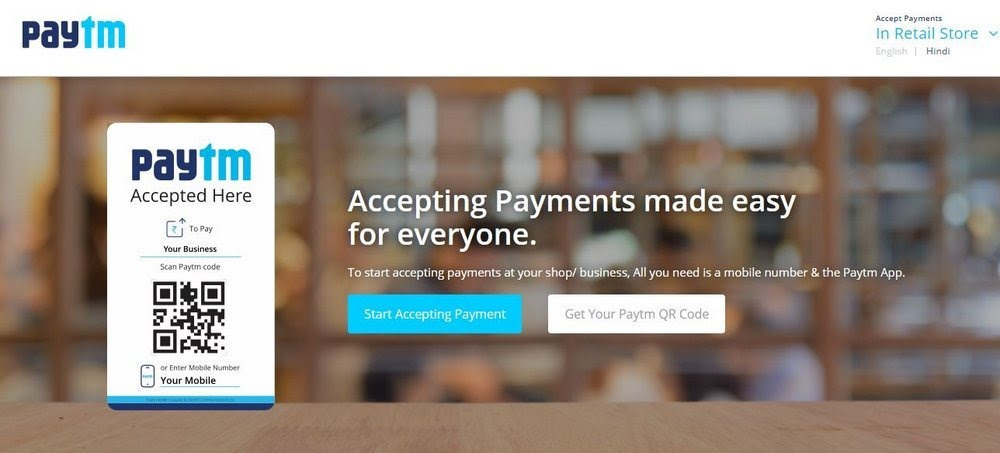
Paytm has just created millions of Point of Sales (PoS) across the nation, with one strategic move. Now, anyone with a merchant account with Paytm can receive payments via debit card/ credit card, which means that digital payments have been super-simplified and scaled beyond imagination.
This is certainly one of the masterstrokes by Paytm for encouraging even more digital transactions and a good move towards an absolute cashless economy. Paytm founder Vijay Shekhar Sharma said, “India needs a very innovating mobile pos machine and Paytm has already been accepted by many merchants. By extending our merchant network to all other payment networks, we are enabling digital payments to a very large number of Indians.” How Will It Work?Suppose you visit a local grocery shop to purchase few items and the shop-keeper has a Paytm account. Now, there can be two scenarios: Either you also have a Paytm account, which means that you can simply transfer the amount. Or, you don’t have a Paytm account, but have debit/credit card to make the payment.In this case, the merchant can accept your debit/credit card via his Paytm app, and complete the payment. This is how it will work: Step 1: The merchant raises the bill, and gives you his phone wherein you enter your debit/credit card number Step 2: The customer receives an OTP on his mobile number Step 3: Enter the OTP inside merchant’s Paytm app Step 4: Payment complete Till December 31, there would be no fees for such card based transactions on merchant’s Paytm app. The new version of the app has been updated, and under ‘Accept Payment’ tab, merchants can receive payments from cards issued by Rupay, Visa, MasterCard and Maestro. Big Boost For Cashless EconomyThere are around 150 million users of Paytm, and almost 1.5 million merchants registered with the. With one single step, these 1.5 million merchants can now accept debit and credit based payments, thereby transforming into a live PoS, instantly.Besides, RBI has recently increased the limit for merchants to Rs 50,000 per month, which means that they can send upto Rs 50,000 from Paytm app to the bank, without KYC. This, along with PoS transformation means that merchants would now prefer Paytm mode of accepting payments (both from credit/debit card or peer-to-peer money transfer). Merchants can register with Paytm by visiting here. Paytm is expecting atleast 10-15 million more merchant accounts after this decision to convert apps into PoS. We will keep you updated as more details come in. courtesy of ; TRAK |
Wednesday, November 23, 2016
Paytm Has Just Created Millions Of PoS Across India With A Single Move; Every Paytm User Can Now Accept Card Based Payments

Sunday, November 6, 2016
LinkedIn Signs MoU with HRD ministry, Makes it Easier for Students to Find Jobs
LinkedIn Signs MoU with HRD ministry, Makes it Easier for Students to Find Jobs

LinkedIn has been trying to make an impression in the Indian job industry with a slew of services like the Placements and Starter Pack. The Indian job market is not very straight forward, and competing companies like Naukri.com and Timesjobs already have a strong user base.
To take on such services, LinkedIn has signed a Memorandum of Understanding(MoU) with the Human Resource Development Ministry to create and market more job opportunities for students across India.
LinkedIn has its own Jobs portal where companies and recruiters can post their company openings. Job seekers can also directly apply through their LinkedIn profiles, making it easier for the seekers and cutting down time on creating CVs.
Millions of students graduate every year, and number of jobs available in the market are relatively low. Also, a lot of students get misguided after graduation and pursue something they are not fit for, due to shortage of opportunities. Through this MoU, the Placements product will be adopted by all Indian colleges affiliated with All India Council for Technical Education (AICTE).
Akshay Kothari, Head of Product – LinkedIn India, said “Our objective with Placements is to help India’s best talent get access to job opportunities, regardless of their location. With this partnership, we are excited to see our vision quickly become a reality.”
LinkedIn Placements provides an equal opportunity to all students, regardless of their location or college, through an online assessment test, which gives them access to thousands of openings in 35 top corporates in the country. This test is standardized across campuses and does not have any conditions and filters.
The service has already received a lot of interest from students and job seekers, with 1.2 million job applications in less than 2 months. Placements also makes it a tad easier for fresh graduates to apply to dream companies, that were out of reach earlier.
Will AICTE be able to help students?
The main issue with colleges in India is infrastructure and adherence to guidelines. AICTE might direct all the affiliated colleges to start this Placements service immediately, but the infrastructure and the processes will make it painfully long for students.
Especially right now, when the market is at its high, providing this opportunity to students will make it extremely competitive and beneficial for the companies. However, a lot of colleges lack proper conditions to allow their students to even take the test.
Another issue is the quality of education. The top colleges in India have better quality of education, giving them an advantage over the lesser known colleges. In the end, the more educated the student, the easier it is to get placed in these top companies.
The best solution would be to combine Placements with Khan Academy or Coursera to allow students to prepare and compete with everyone around India. This will ensure everyone is at par for an exam that is the same across different colleges.
courtesy of: trak
Thursday, November 3, 2016
Airtel Might Offer Cheaper Voice Calls In Future, But Not Free
Airtel Might Offer Cheaper Voice Calls In Future, But Not Free
Posted: 03 Nov 2016 07:57 AM PDT
India’s leading telecom operator- Airtel has rubbished the possibilities of offering free voice calls for lifetime even though the new entrant, Reliance Jio is aiming to capture market share with its free voice offering.
 Gopal Vittal, MD & CEO, India and South Asia, Bharti Airtel, mentioned the telecom sector as “brutally competitive market” and said that the competitors kept Airtel at it toes, but it never got “obsessed” with them. Since Jio is a new entrant into the immensely competitive telecom market, it is bound to have ‘market penetration’ as its pricing strategy which will erode the margin of the incumbents. “If the question is are you going to see price erosion…I think given that you have a new entrant on the horizon, yes, you will see some price erosion. Because that is the game new entrant will play,” said Vittal. Jio is offering free voice and data to its subscribers under its ‘Welcome Offer’, valid till 31 December 2016, for those who get a Jio SIM before 3 December. Post that, the users would still be able to make free voice calls for life as long as they are subscribed to any of the Jio’s tariff plans. It is worth noting that as a result of this free data offering, Jio’s average data speed has dropped considerably. Airtel is also offering unlimited voice calls on its Infinity pack priced at Rs. 999 but it is not offering it for free. A telecom operator needs to make money from one way or the other. If it is making good amount of money from one offering then it can offer the other at a reduced rate or may be for free. “There will be a large number of customers who are on basic feature phones and low end smartphones who will want to buy services differently. They will want to de-couple voice and data. Equally, there will be a set of market where they will want (it) bundled…If a guy is not paying for data at all, he will pay for something,” Vittal added. Airtel also made it clear that it will not be offering standalone free voice plans. “If you are only buying voice, how will one do that?” Vittal explained. It doesn’t come as a surprise to us as offering very affordable free voice plans won’t make sense for any telecom operator. Jio might be able to pull it off, by the economies of scale and with a huge base of loyal customers subscribed to monthly packs starting from Rs. 149 and above. As we earlier reported, Airtel is also upgrading its LTE network to VoLTE, so we can expect to see VoLTE voice packs priced very competitively, but certainly not for free. |
Thursday, November 26, 2015
Indian Parliament to go Completely Paperless Starting Today #DigitalIndia
Indian Parliament to go Completely Paperless Starting Today #DigitalIndia

Today, winter session started in the Indian Parliament and for the first time, the corridors of the institution will not be filled with bundles of papers as the it is going completely paperless. From this session onwards, all annual reports from various ministries, committee and panel reports, private member’s bills, unstarred questions and bulleting –1 will be uploaded on the Parliament website.
The Government is also carrying out a comprehensive training program for all the MPs on how to use Digital documents going forward. Once the training is over, all the ministers and MPs and expected to use the digital version.
The new move will not only cut down on the usage of paper significantly but also will usher a new age into the parliament, where all MPs will able to access any and every document at a touch or a click of a button making Parliament sessions more productive.
While initially, those MPs without much tech know-how may face some teething problems, proper training should help them get upto speed within no time.
In February of this month, it was also announced that Union Cabinet meetings will use Kindle and will go completely paperless. All notes of the meeting will be put up on Kindle devices for ministers reference. The ministers will be able to access those notes from their eBook readers at meetings and then return these devices to the Cabinet Secretariat immediately after.
While such plans and proposals have been around for quite a few years, it is heartening to see Modi led government’s intent in bringing about these changes. Sources have mentioned that personnel from National Informatics Centre (NIC) have been working overtime to make this digitization possible.
What is also good to see is that Government’s Digital India initiative has an holistic approach, where every Government function and activity is being digitized rather than being done in bits and pieces manner.
We are sure that this initiative may have met with a lot of opposition as most of our ministers (who are on the wrong side of seventies) are zero tech-savvy and they resist change. Even after all this, the Parliament has boldly gone paperless!
Cortesy of : trak.in
Sunday, November 15, 2015
Indian Postal Department Will Now Convert Your Selfies Into Postage Stamp!
|
Posted: 12 Nov 2015 09:51 PM PST
 Stamp department of India Post have introduced a unique program, wherein anyone can convert their selfies into a valid postage stamp. Christened as ‘My Stamp’, this innovative program can be seen as an interesting plot to revive the old tradition of hand written letters and snail mails. As per reports, India Post is already in the process to acquire high end printing devices, which can efficiently convert selfies into postage stamp. Prasar Bharti informed this via Tweet yesterday:
After some time, All India Radio also confirmed this development, by tweeting: “#Indian Postal department would soon launch a scheme ‘#MyStamp’ in which people can convert their “Selfies” into a postage stamp.” Charges for Selfie-Postage StampDNA India reported that India Post will charge a fee of Rs 300 to create a dozen worth of postage stamp from your selfie. As per the reports, one needs to visit the Head Post Office with a selfie and fill out a form detailing your identity. Soon, the selfie would be scanned, and converted into a legal postage stamp and provided to you instantly.In case you don’t have any camera to click to selfie, India Post will provide you one on the spot, and help you to click a selfie! The ‘My Stamp’ sheet will have 12 customized postage stamps, printed with the selfies of the person who is willing to shell out Rs 300. In Bhutan, this special program has been running for quite some time now; wherein tourists can convert any picture (or selfie) into a legal postage stamp. Introduction of this innovative program in India can certainly help India Post to generate a new level of interest among net-savvy generation. Meanwhile, India Post has launched a stamp design competition for Republic Day – 2016 celebrations. This competition will give a prizes of Rs 20,000. Details can be found here. Selfies: Driving InnovationThe immense popularity of selfies is now driving innovation across various industries.For instance, Federal Bank is inviting new customers to open a new bank account using just a selfie and Aadhaar Card/Pan Card. Very soon, Master Card will allow payment authentication using selfies as your security credentials can now be verified from your images. Soon, selfies would hold the same importance as fingerprints. Selfie, along with Hashtag and Tweep have already found mention in the 2014 Merriam-Webster Dictionary. However, selfie clicked inside a polling booth during an election can also land you in jail. Will you convert your selfies into postage stamps? Do let us know by commenting right here! courtesy of : trak |
Thursday, November 12, 2015
Zomato Blacklisted By 6 IITs for Campus Placements; Students Warned Against Contacting Them
7 year old Zomato, which is the poster-child of food tech based startups in India, having expanded to 22 countries and generating 1.9 million views page traffic in a month; having a valuation of more than $1 billion have been blacklisted by IITs from campus placements.
Atleast 6 IITs – Delhi, Bombay, Kharagpur, Madras, Guwahati and Kanpur have confirmed this development.
Atal Ashutosh Agarwal, Vice-President, Technology Students’ Gymkhana at IIT-Kharagpur, said, “Any company which violates the procedural guidelines laid down by the AIPC may be blacklisted,”
Meanwhile, another placement official at one of the IITs have said, “No company should take the IIT system for granted,”
Back in July, Deepinder Goyal, founder of Zomato had lashed out against IIT Delhi, the place from where he had graduated. The issue was that Zomato was not provided day 1 slot for campus interviews, as the salary + ESOPs offered by them amounted to just Rs 26 lakh, a figure way too less for IIT Delhi’s standards.
He had said, “Campus placements in India are broken. Placement cells optimize only for money. Growth, esops, quality of work is secondary.”
Mohak Mehta, former placement manager at IIT Bombay says, “There are startups which get very egoistical about getting an early slot.”
At that time, IIT Delhi had responded by saying, “Any company which has to compete for a slot has to match the cash salary offer. Zomato did not match the salary offer,”
The issue didn’t end, it seems. Placement heads from 6 different IITs have now ganged up, and entirely stopped Zomato from entering their premises for any placement related activity.
As per Times of India, the main reason for Zomato’s blacklisting may be the recent layoffs, wherein their management had fired 10% of their employees in one single go. IITs do tend to give a warning in case of such unprecedented actions by recruiting companies; and blacklisted in case of severe actions.
Students Warned Against Contacting Them
An unverified circular from IIT Delhi is making rounds in the social media, which explicitly warns students from contacting Zomato in any form. As per the circular, Directi, a domain and web hosting company along with Zomato are blacklisted from campus placements, and if any student is found aiding them or contacting them, on or off campus, then strict disciplinary action would initiated against them.
This is most probably for the first time in history that IIT students are being warned from contacting a billion dollar startup!

We are still trying to verify the authenticity of this circular.
Meanwhile, blacklisting of Directi, which was implemented last year, may be revoked for 2015-16 placement season. They were blacklisted over placement interviews at IIT Kanpur last year. Placement heads at one of the IITs said, “Since IIT-Kanpur was the most aggrieved party, the decision to revoke the ban has now been left to them,”
Recently Deepinder Goyal came into news for sending out a hard hitting email to their sales team, detailing how they are missing the targets and more firing may become a necessity. The stern tone of this email surprised one and all.
We had earlier covered how Deepinder Goyal performed poorly at Reddit India AMA; and we had shared his 16 weird answers.
Is this recent blacklisting an issue of ego clash or a personal vendetta against Zomato? We will keep you updated as more details come in.
Courtesy of : TrakTuesday, September 29, 2015
Google With Digital India: Android Will Have 11 Regional Languages; WiFi Plan Across 400 Railway Stations Confirmed

During PM Modi’s recent visit to US where he met top notch CEOs and founders of technological companies, several new and exciting updates were announced, which were in sync with Digital India vision.
Here are two major updates from Google, which were shared by their CEO Sundar Pichai during his meeting with PM Modi:
Android Will Have 11 Regional Languages
In order to spread the usage of smartphone among non-English speaking population, it is very important to deliver them content and functionalities in their regional language.
Sensing this need, Google will now provide Android OS in 11 regional languages of India. Although details were not shared regarding which languages are included, but Sundar made sure to make PM Modi happy as Gujarati is included in this list.
This is certainly one of the biggest decisions from Google, to help the spread of Digital India vision. We had earlier shared that Hindi content consumption is growing at a rate of 94%; while 37% of Internet users want content in their regional language.
Internet Across 400 Railway Stations: Biggest Public WiFi Project In India
Sundar Pichai confirmed their promise of providing high speed WiFi across 400+ railway stations across India. We had already shared this news earlier in September, when we had published some exclusive images of this project.
Sundar Pichai, officially announced the WiFi project via blog, where he said that Google, along with RailTel will provide Internet access to 10 million passengers a day.
To start with, they will roll out high speed Internet via WiFi across 100 stations by the end of 2015; which would be later expanded to 400 railway station.
Interesting part is that, this WiFi won’t be free after first 30 minutes. However, by paying for a service, rail passengers would be able to access unrestricted Internet in train, and the speed would be fast enough to download a movie in 5 minutes!
Once executed, it would be the largest public WiFi project in India.
As we had shared earlier, collaboration with RailTel is the master stroke which Google has played, as they are now not dependent on traditional ISPs such as Reliance and Airtel to provide WiFi. Due to this restriction, their earlier project of Google Fiber was not executed in India.
RailTel already has coverage of 63,500 kms of rail track, across 5000 railway stations; They have already laid fiber network across 32,500 kms, and work is in progress for 29,500 kms now.
After disappointments from Facebook, these new updates from Google are whole-heartedly welcomed because this is the true Digital India expansion: Fair and Quality Internet for all.
Courtesy of : Trak
Subscribe to:
Posts (Atom)